Phone
+33 (0)1 76 54 08 64
Address
66 avenue des Champs-Élysées
75008 Paris – France

Labeling dyes can be used to monitor spermatozoids in the cervix of animals. These dyes specifically stain the sperm cells, allowing easier visualization and tracking. By using fluorescence microscopy or flow cytometry, researchers can observe the presence, concentration, and movement of labeled spermatozoids in the cervix.
This technique provides valuable insights into sperm transport and viability, aiding in the optimization of breeding strategies in animals.
LBL-Dye CellTag 580 and LBL-Dye CellTag 717 are two cell-permeant, photostable, and no cytotoxic cellular tracers particularly well adapted for long-time imaging on living cells.
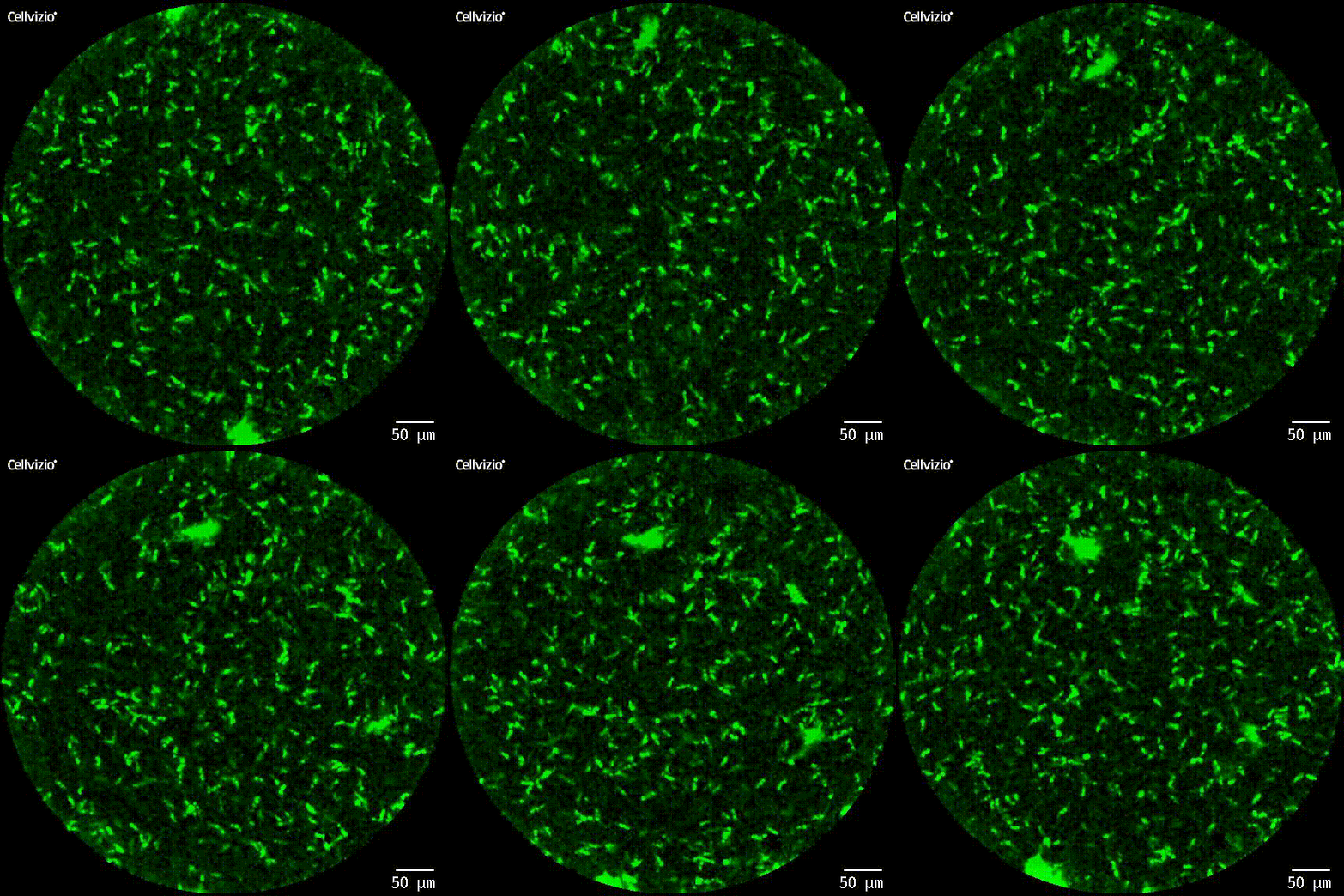
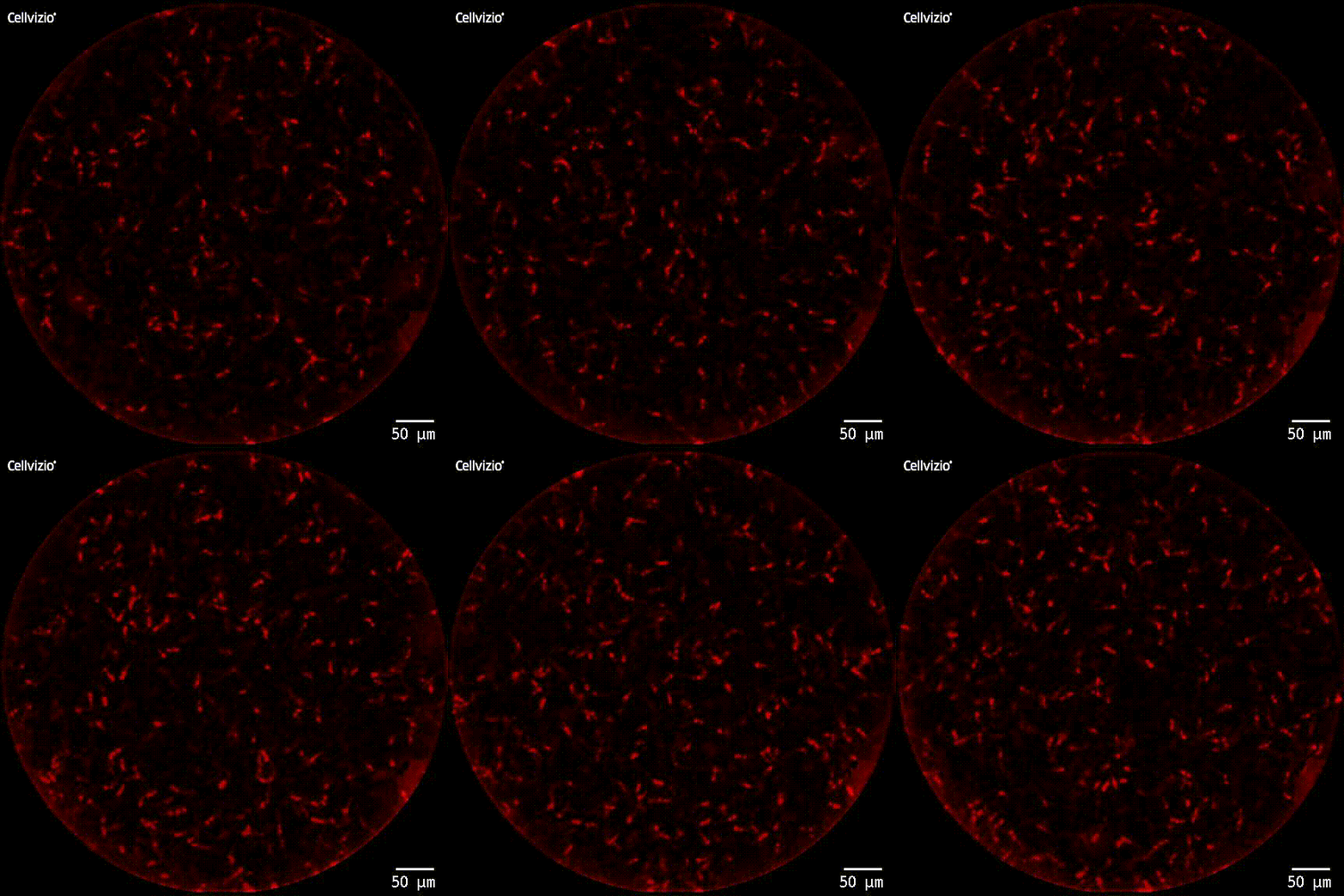
Spermatozoids were stained with LBL-Dye CellTag 580 (left) and LBL-Dye CellTag 717 (right) and imaged using Cellvizio (MaunaKea Technologies).
The efficacy of fluorescence-guided surgery in facilitating the real-time delineation of tumours depends on the optical contrast of tumour tissue over healthy tissue. Here we show that CJ215—a commercially available, renally cleared carbocyanine dye sensitive to apoptosis, and with an absorption and emission spectra suitable for near-infrared fluorescence imaging (wavelengths of 650–900 nm) and shortwave infrared (SWIR) fluorescence imaging (900–1,700 nm)—can facilitate fluorescence-guided tumour screening, tumour resection and the assessment of wound healing...
The efficacy of fluorescence-guided surgery in facilitating the real-time delineation of tumours depends on the optical contrast of tumour tissue over healthy tissue. Here we show that CJ215—a commercially available, renally cleared carbocyanine dye sensitive to apoptosis, and with an absorption and emission spectra suitable for near-infrared fluorescence imaging (wavelengths of 650–900 nm) and shortwave infrared (SWIR) fluorescence imaging (900–1,700 nm)—can facilitate fluorescence-guided tumour screening, tumour resection and the assessment of wound healing...
The efficacy of fluorescence-guided surgery in facilitating the real-time delineation of tumours depends on the optical contrast of tumour tissue over healthy tissue. Here we show that CJ215—a commercially available, renally cleared carbocyanine dye sensitive to apoptosis, and with an absorption and emission spectra suitable for near-infrared fluorescence imaging (wavelengths of 650–900 nm) and shortwave infrared (SWIR) fluorescence imaging (900–1,700 nm)—can facilitate fluorescence-guided tumour screening, tumour resection and the assessment of wound healing...
Proimaging